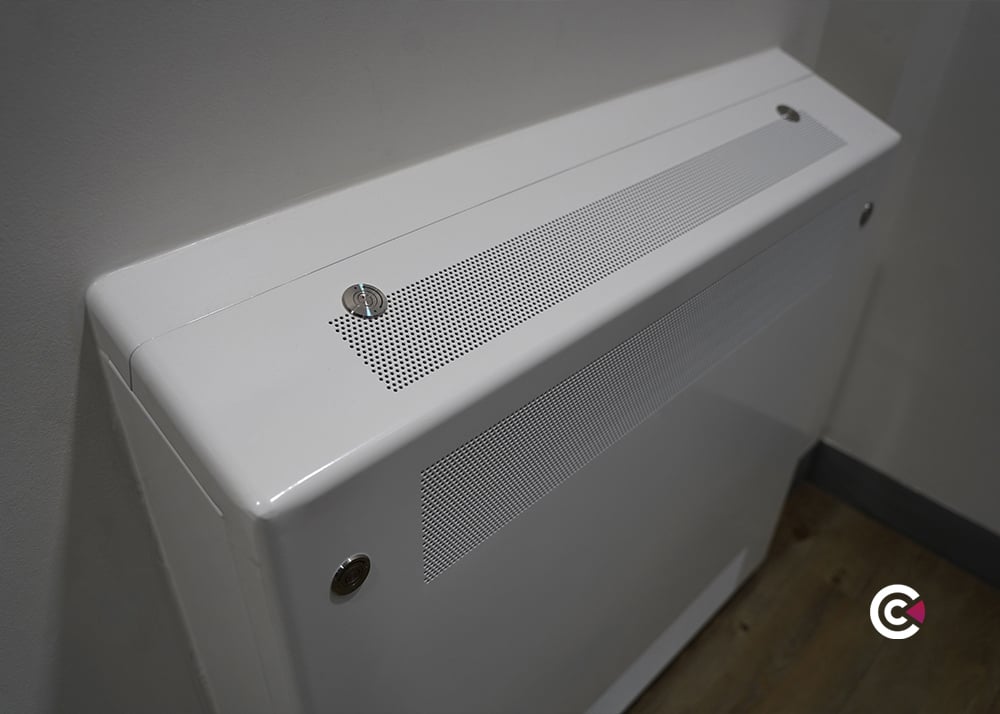



What Are the NHS Guidelines for Anti-ligature Radiator Cover Grilles?
If you're specifying radiator covers for a mental health unit, you'll soon be asked about the grille. How small should the holes be? What standard should it meet? Is there an NHS specification?
The short answer is that there's no NHS standard for anti-ligature radiator grilles, and no British Standard that defines anti-ligature at all. But there is guidance you can point to, and a test method that gives useful evidence. Here's how it fits together.
Is There an NHS Standard?
No. HBN 03-01, the NHS guidance for adult acute mental health units, expects fixtures to reduce ligature risk where continuous observation isn't possible, but it doesn't set a hole size or pattern for radiator grilles. Neither does any British Standard.
That leaves trusts to set their own requirements, usually through a ligature risk assessment and their estates specifications.
Where the 2mm Hole Pattern Comes From
The closest thing to official guidance on hole size comes from outside healthcare. The Home Office Police Buildings Design Guide for custody suites specifies ventilation grilles perforated with 2mm holes at 4mm centres in a triangular pattern (section PD3.02.14).
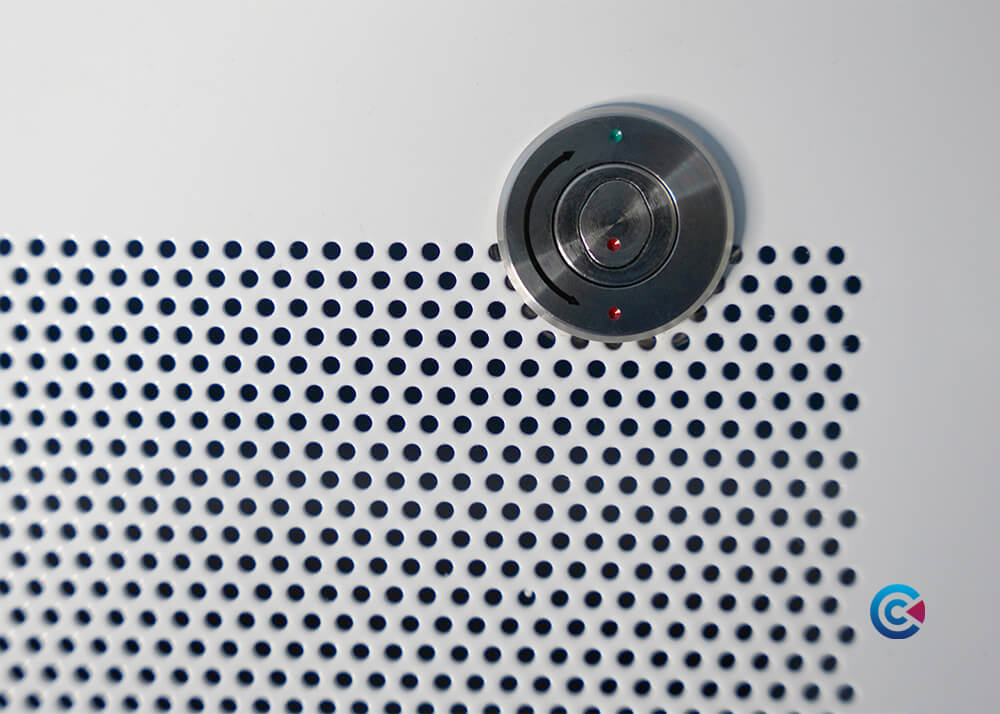
The pattern explained
2mm holes, 4mm centres, triangular pitch
Each hole sits 4mm from its neighbours, so any three form an equilateral triangle. It's the pattern set out in PD3.02.14.
- 2mm
- Hole diameter
- 4mm
- Between hole centres
- 60°
- Triangular (staggered) pitch
That clause was written for ventilation grilles in police cells, not radiators. But because it's the only government guidance that sets a hole size, many NHS mental health trusts have adopted it for radiator cover grilles too. It's the pattern Contour uses across its anti-ligature range.
What IP3X Does and Doesn't Prove
There's no test designed specifically for ligature resistance. The nearest is the ingress protection (IP) code in BS EN 60529. A rating of IP3X means a 2.5mm probe can't get through the openings, so the grille resists tools, thick wires and similar objects.
Contour's grilles are tested by a UKAS-accredited laboratory and exceed the IP3X requirement.
IP3X is useful evidence, but it is an ingress test, not an anti-ligature certification. A grille can pass IP3X and still sit in a cover with gaps, exposed fixings or a poorly fitted frame. Look at the whole product, and ask what else it has been tested for, how, and by whom.
The Grille Is Only One Ligature Point
On a radiator or its cover, ligature risk can come from:
- 1the grille itself, if the holes are too large
- 2exposed thermostatic radiator valves (TRVs)
- 3gaps in the cover's framework or between panels
- 4gaps where the cover meets the wall or floor
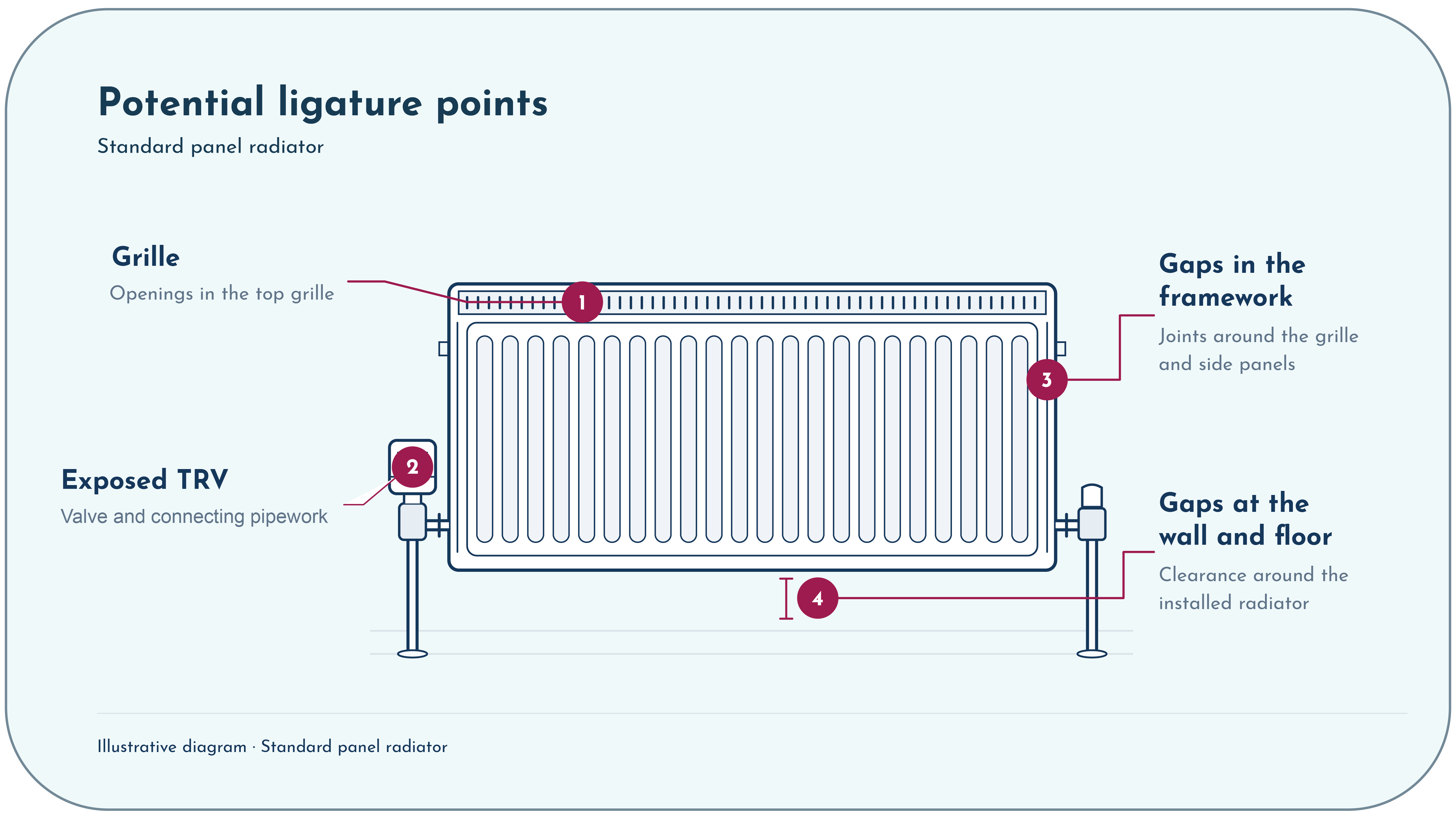
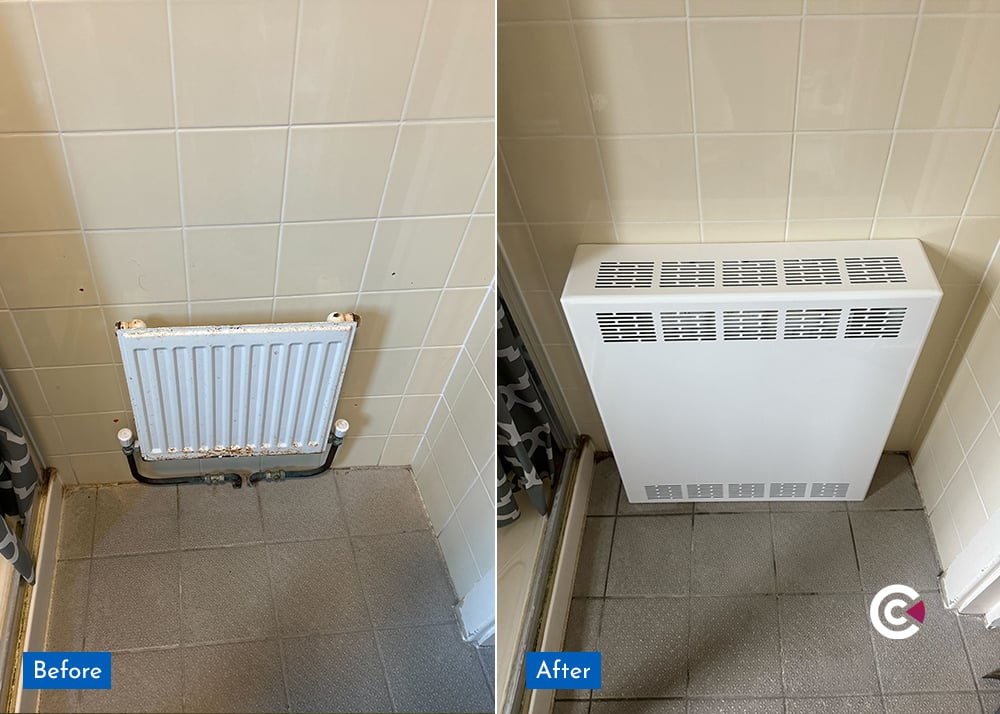
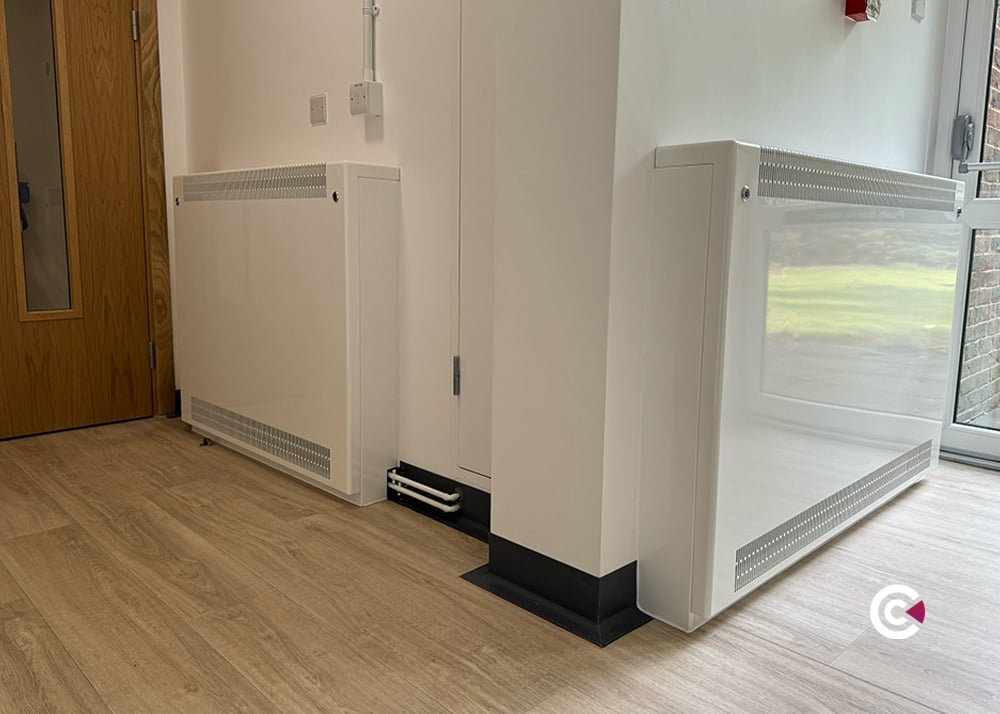
A good anti-ligature cover deals with all four. TRVs sit inside the cover or behind an anti-ligature shroud. Joints are minimised and sealed. And the cover fits tightly to the wall, with an open-ended shoulder to close any gap to an adjacent wall.
How Contour's Grille Is Made
Older radiator covers often used a separate mesh welded inside the casing. Each spot weld is a potential weak point, and the mesh can be prised out.
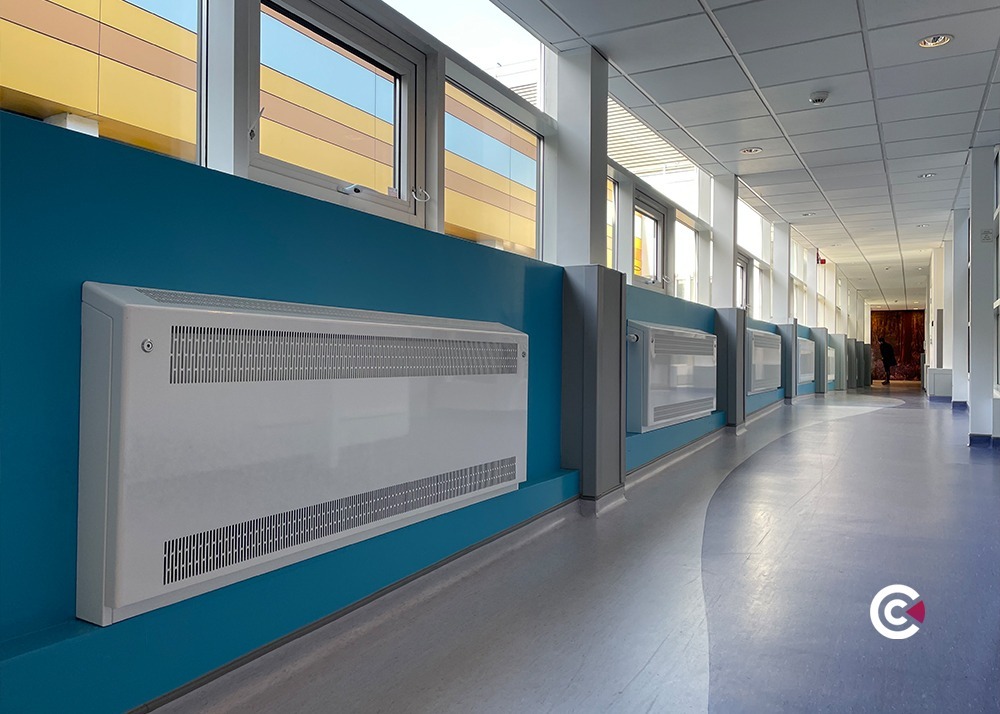
Contour's DeepClean Extra covers have the grille punched directly into the steel casing. There's no separate mesh, so there are fewer weak points to tamper with, and the cover looks cleaner. The punched grille gives more than 15% more open area than a welded mesh, which helps heat get out. Covers are made from 1.5mm or 2mm Zintec steel, or Magnelis in wet areas.

Questions to Ask Any Supplier
- What hole size and pattern does the grille use, and why?
- Has the grille been tested to BS EN 60529, by which lab, and is that lab UKAS-accredited? Can we see the report?
- What safety tests have been carried out on the product?
- How are valves, fixings and gaps to the wall dealt with?
- How do staff clean inside the cover, and how often?
- How much does the cover reduce heat output, and has that been allowed for?
Our radiator cover specification guide covers each of these in more detail, and our complete guide to anti-ligature sets out the wider guidance.
Specifying for a ward refurbishment? Arrange a free site survey and we'll talk you through the options.
Frequently asked questions
Is there an NHS standard for anti-ligature radiator grilles?
No. HBN 03-01 expects fixtures to reduce ligature risk, but it doesn't set a hole size or pattern for radiator grilles, and no British Standard defines anti-ligature.
Where does the 2mm hole pattern come from?
From the Home Office Police Buildings Design Guide for custody suites (section PD3.02.14), which specifies 2mm holes at 4mm centres in a triangular pattern. Many NHS trusts have adopted it for radiator cover grilles.
Is IP3X an anti-ligature standard?
No. IP3X (BS EN 60529) shows a 2.5mm probe can't get through the openings. It's useful evidence, but anti-ligature performance also depends on gaps, fixings and installation.
Free download
A Guide to Anti-Ligature Design
Standards, product requirements and what to ask suppliers, in one free guide you can keep and share with your project team.