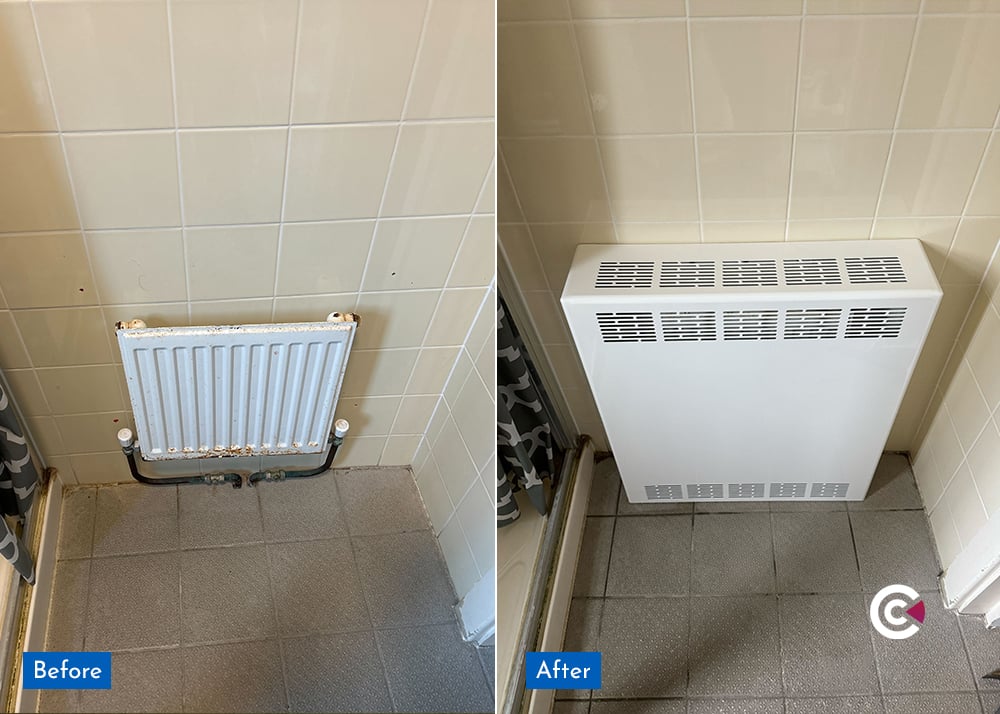
-1.png)



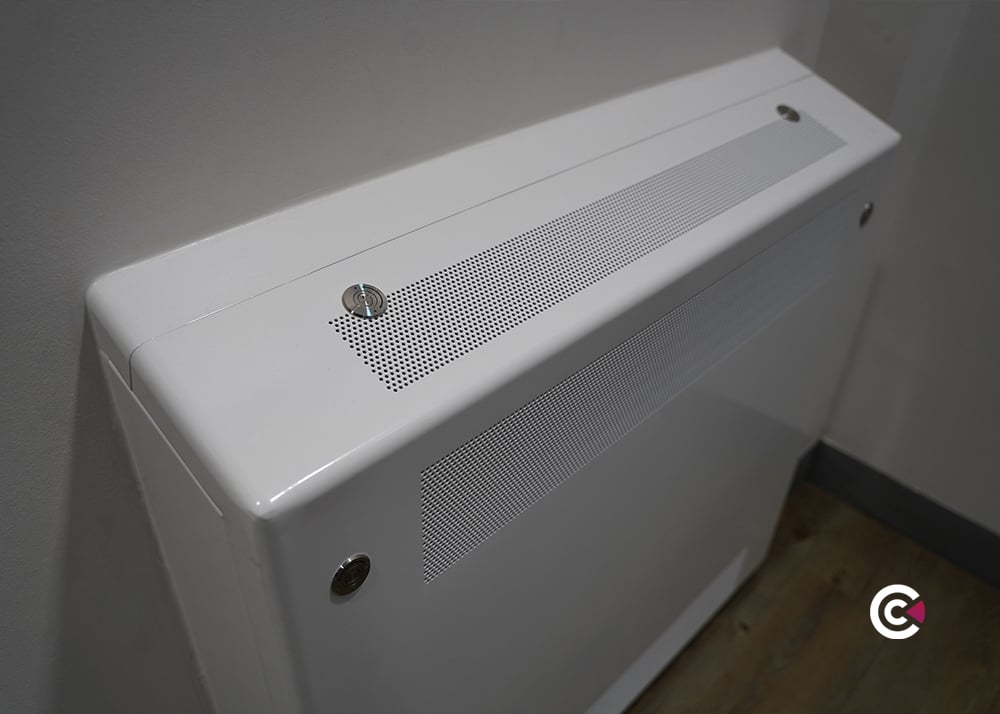

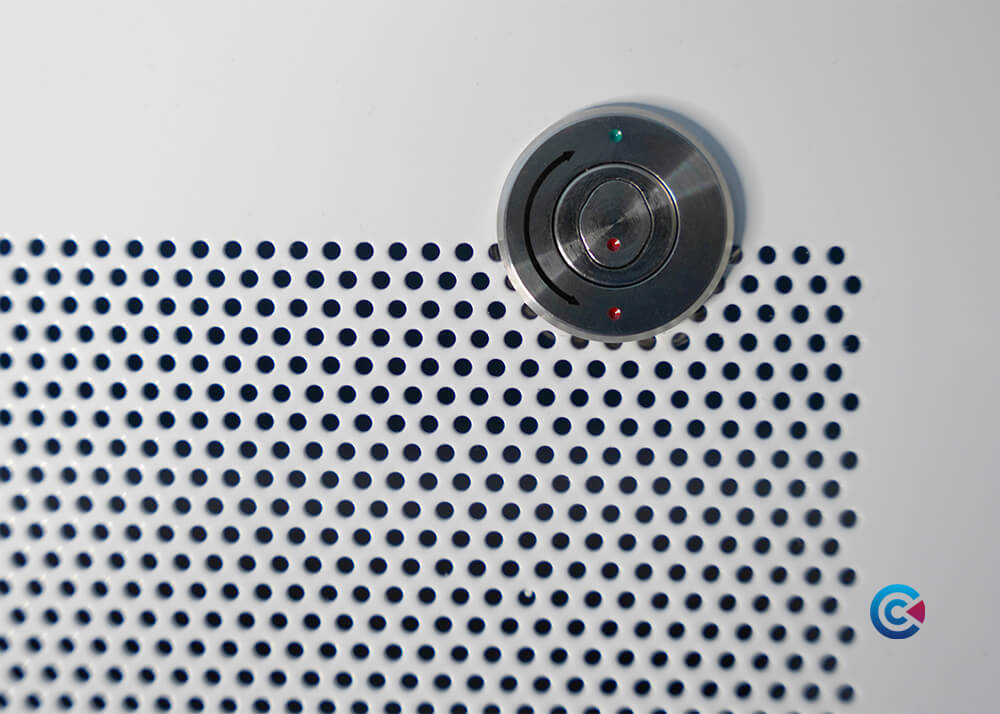


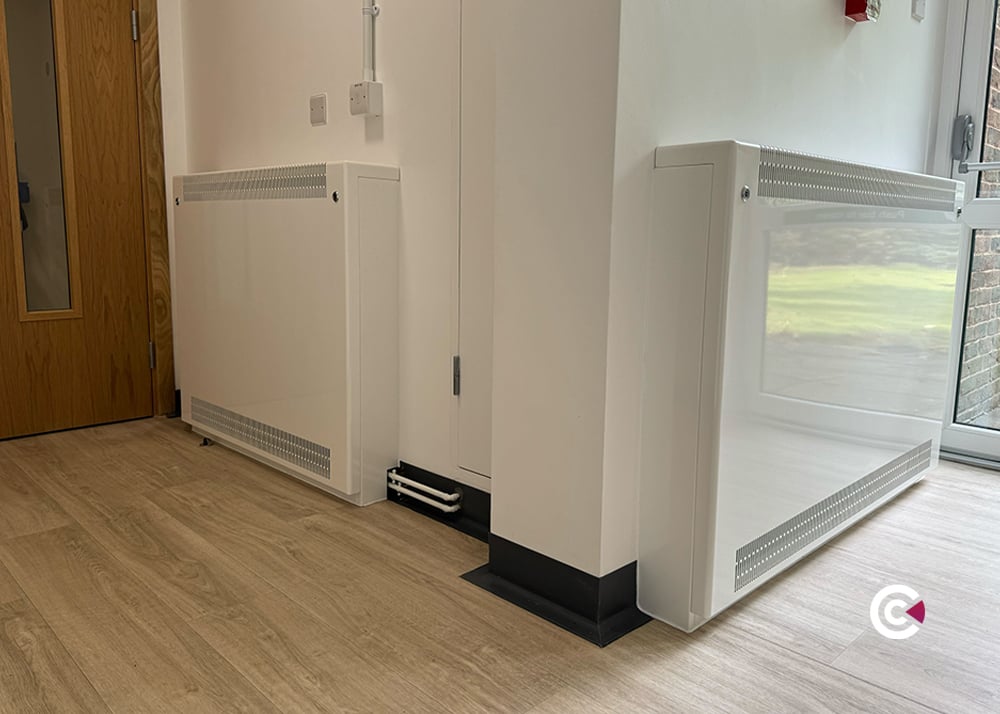
A radiator does not cause a healthcare-associated infection. But a radiator cover that traps dust behind a fixed panel or needs two people to disassemble before it can be cleaned, sits directly in the path of any infection prevention and control (IPC) review. For NHS estates teams, M&E consultants and healthcare architects, heating specification belongs inside the hygiene conversation, not outside it.
What is an HCAI?
A healthcare-associated infection (HCAI) is an infection that develops while a patient is receiving treatment or care in a healthcare setting, and that was not present or incubating when that care began. HCAIs affect patients across hospitals, clinics and care settings, and can be linked to clinical procedures, contact between people, contaminated equipment, or the microorganisms present in the surrounding environment.
Infection prevention extends past hand hygiene and clinical practice into the building itself: how rooms, surfaces, fixtures and building services are specified, cleaned and maintained. Heating equipment sits inside that scope. A radiator cover's construction can support cleaning, inspection and maintenance, or work against it.
Why heating belongs in the infection-control conversation
Radiators are fixed in place, close to patients, staff and heavily used surfaces. Where a cover restricts access, dust, debris and microorganisms can build up somewhere the cleaning schedule can't reach.
There's a difference between a radiator cover that looks clean from the outside and one that's genuinely accessible on the inside. A specification built around repeatable, everyday access does more for hygiene than one that depends on occasional full disassembly. Product design can support an infection-control regime. It doesn't replace one.
Where fixed radiator covers create hygiene problems
A few recurring issues show up in conventional radiator guards:
- Covers held by fixings that need tools, specialist knowledge, or two people to remove
- Fins, pipework and internal surfaces that cleaning teams can't physically reach
- Narrow gaps between the radiator, wall and floor
- Recesses, seams and corners that are hard to wipe
- Damaged finishes that get harder to clean each time they're missed
- Cleaning that depends on an estates team being free to remove the cover first
Each of these turns a routine clean into a maintenance job, and a maintenance job into something that gets deferred.
Start with the room's use and infection risk
Not every room carries the same risk. A waiting area, a consulting room, an inpatient bedroom, an isolation room and an operating or procedure space each call for a different response, and each already has its own cleaning regime in place.
The people who work with that regime day to day should be part of the specification conversation from the outset:
- Infection prevention and control teams
- Estates and facilities managers
- Domestic and cleaning teams
- Clinical users of the room
- M&E designers
- Maintenance contractors
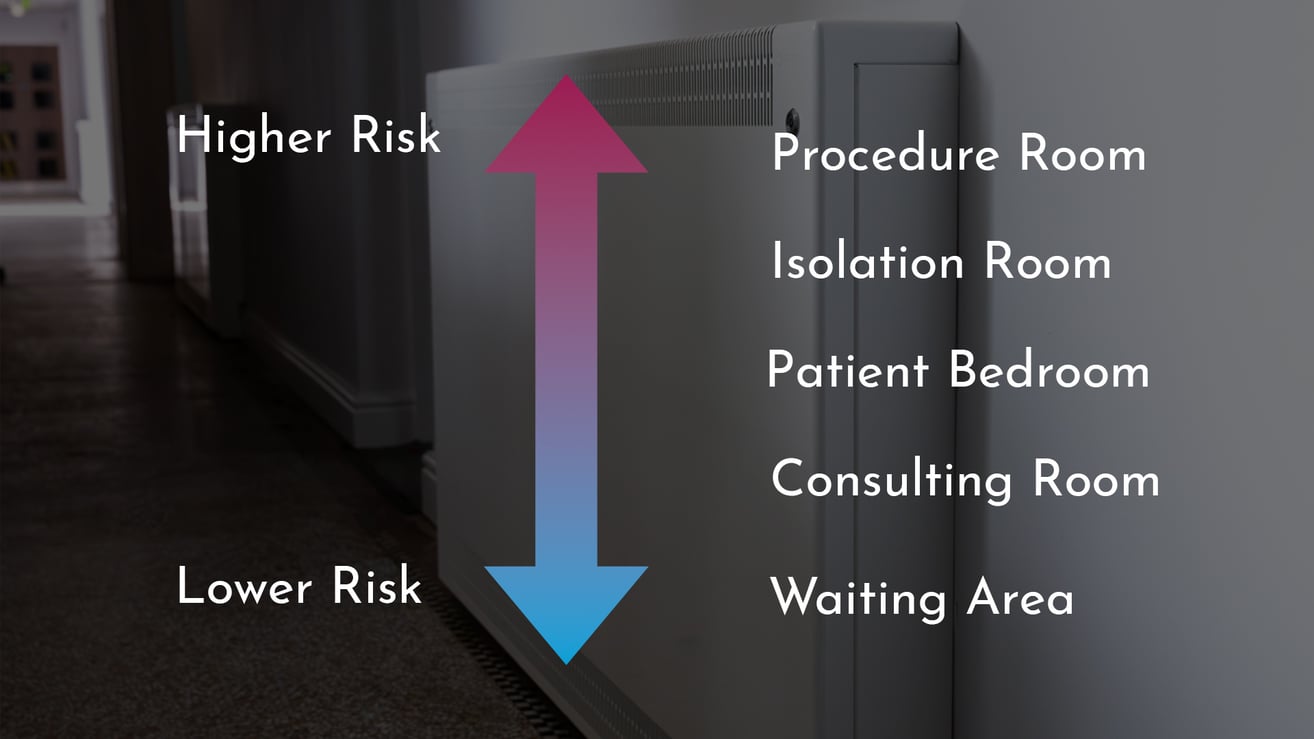
A radiator cover isn't "suitable for healthcare" as a blanket claim. It's suitable, or not, for a specific room's risk category and cleaning procedure.
Make cleaning access a core design requirement, not an afterthought
In hygiene-critical rooms, how a radiator opens for cleaning matters as much as how it looks closed. Look for:
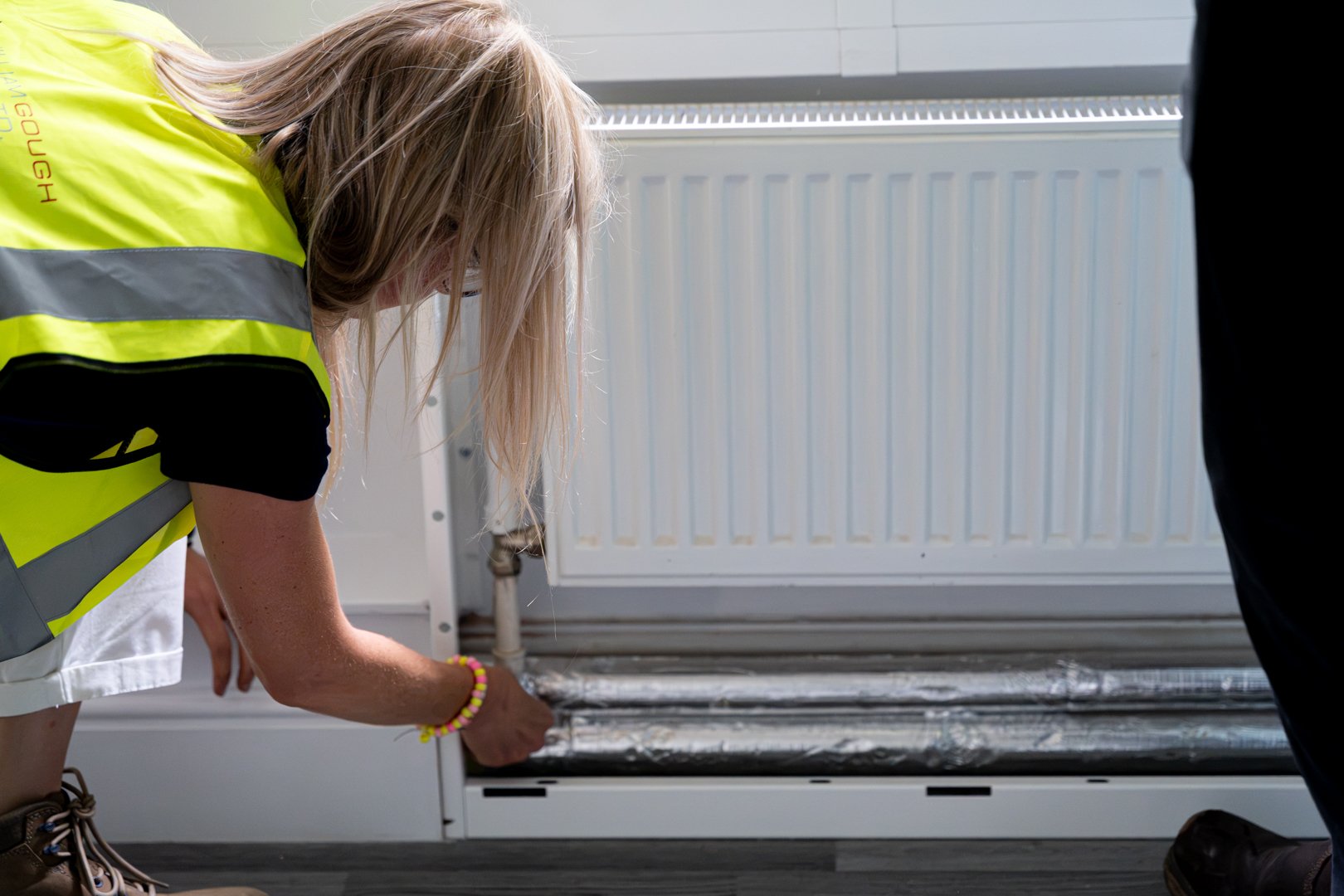
- Full access to the radiator, valves, pipework and internal surfaces
- A door or panel that opens without dismantling the whole casing
- A mechanism cleaning staff can operate alone, safely and repeatedly
- Clear visibility of every surface being cleaned
- Locks and hinges that keep working after repeated daily use
- Fixings positioned to prevent unauthorised opening, where patient safety is also a factor
- Enough clearance to clean the wall and floor junction behind the unit
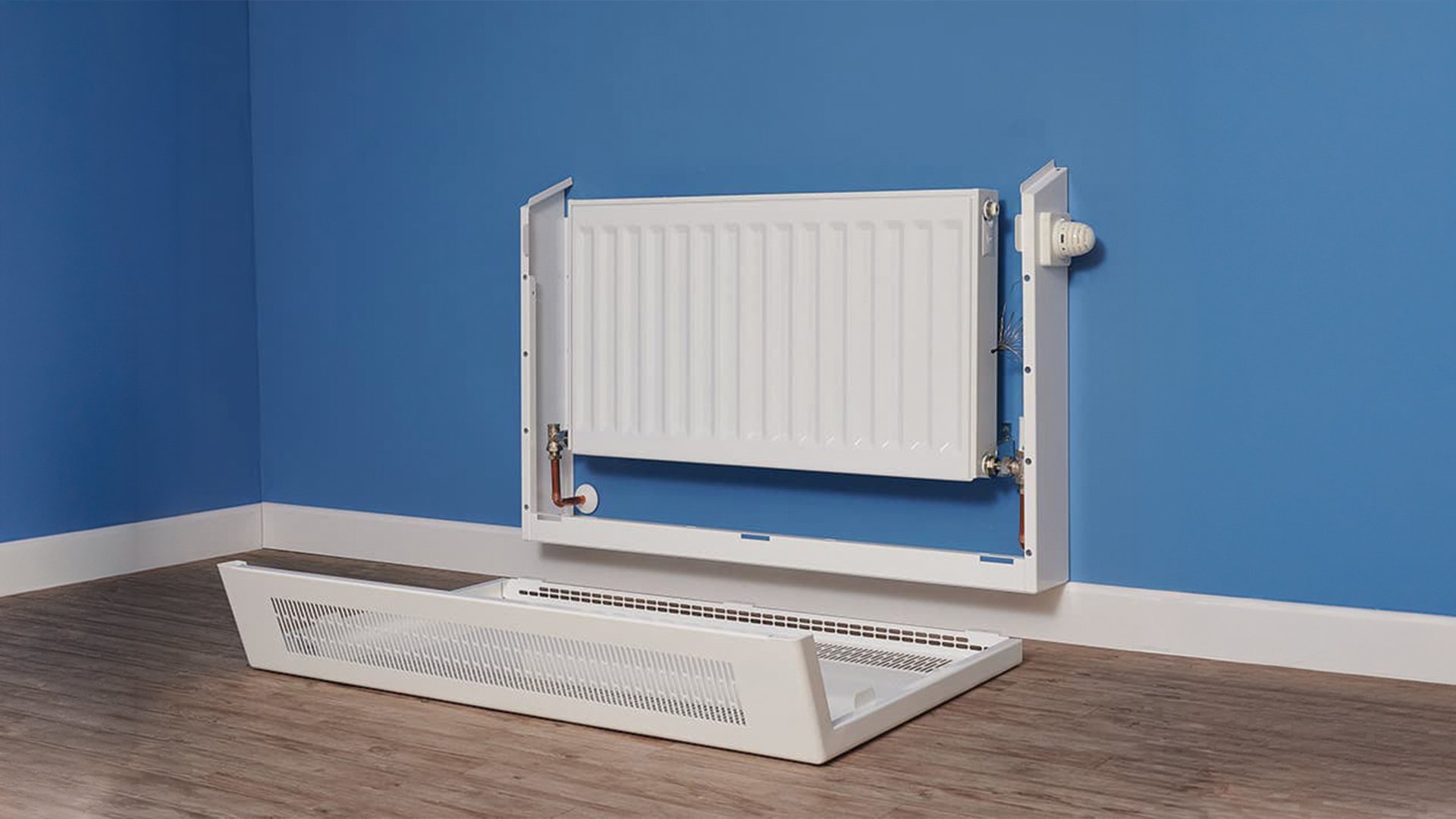
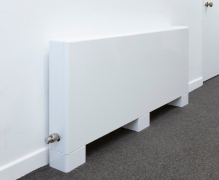
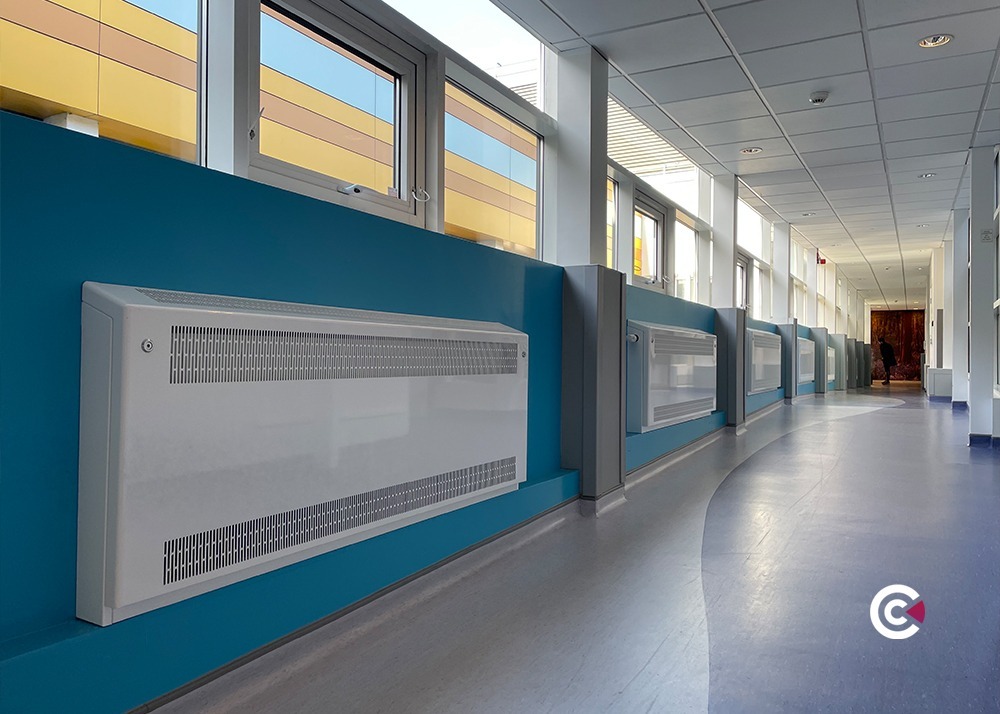
Contour's DeepClean range is a working example of this principle. Its patented front access door (UK Patent No. 2 410 544) lowers flat to the floor on quick-release locks, giving one cleaning operative full access to the radiator's internal and external surfaces without waiting on estates support. Where a rotating valve option is fitted, the radiator itself pivots down, opening up the wall space behind it. The detail worth taking from this: access should be built into the product, not left to depend on how long disassembly takes.
Look at the whole casing, not just the door
A removable door is one part of a cleanable design. The rest of the casing is just as important:
-
- Smooth external surfaces with as few joints as possible
- Internal corners and folds that don't trap debris
- Grille and perforation pattern
- The top profile of the casing
- Fixings that sit flush rather than protruding
- Pipe entry points
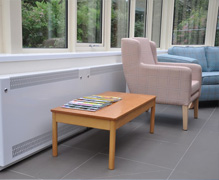
A sloping top can cut down the surface where dust or items collect, but it's a design detail, not a substitute for the cleaning schedule itself. Whether a flat-top or sloping-top cover is the better fit depends on the room's use and cleaning procedure, not on which one looks tidier in a photo.
Where BioCote® fits and where it doesn't
BioCote® antimicrobial protection is a supplementary feature, not the main infection-control measure. Contour incorporates BioCote® into the powder coat finish used across its metal radiator guards and LST products, intended to inhibit the growth of microbes such as bacteria, mould and fungi on the treated surface. BioCote®'s own product data cites a 99.99% reduction in bacteria levels on the treated surface within two hours.
Four points worth keeping separate:
- Antimicrobial protection acts on the surface it's applied to
- It doesn't clear away dust, bodily fluids or organic material
- It doesn't replace a scheduled clean, disinfection or hand hygiene
- Its role is a supplementary layer of protection between cleans
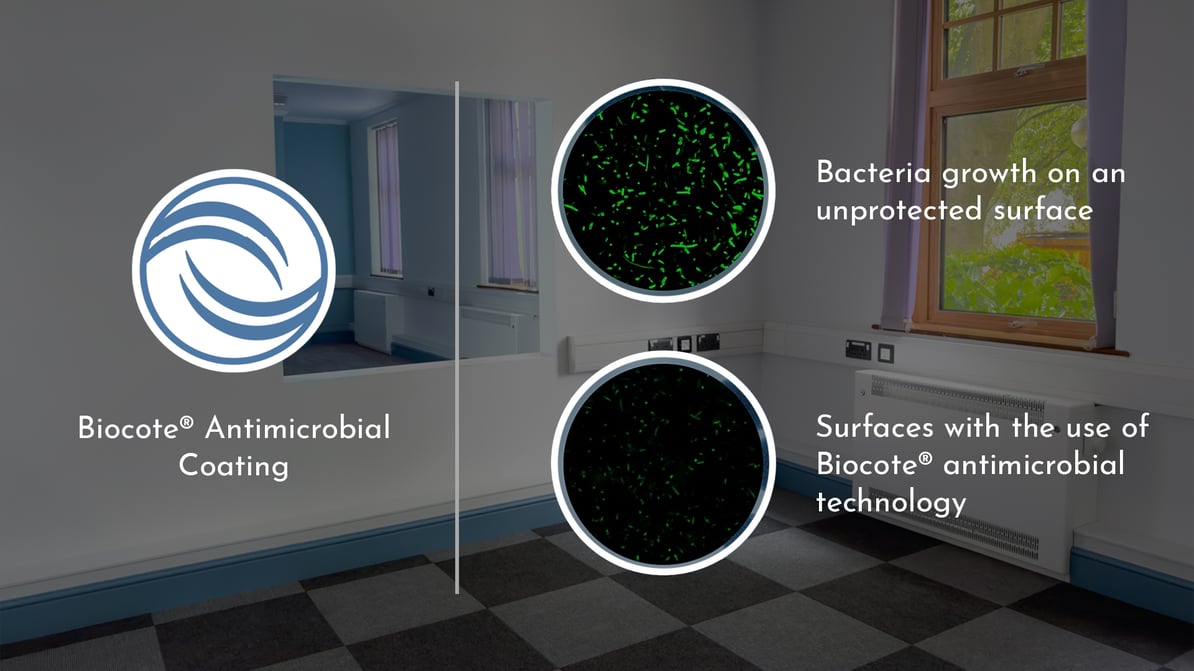
When specifying, it's worth confirming whether the full exposed casing carries the coating, how it's built into the finish, what test evidence supports it, and how repainting or replacing a panel affects the protected surface.
Coordinate radiators with hygienic wall and floor finishes
What is Whiterock?
Whiterock is a proprietary PVCu hygienic wall cladding system manufactured by Altro, widely specified in wet rooms, clinical areas and other spaces that need a sealed, wipeable wall finish. The name is sometimes used informally by specifiers to describe hygienic wall cladding more generally, though it refers to a specific manufacturer's product.
Where a radiator cover meets a hygienic wall finish, the junction is worth checking on its own:
- Avoid a gap that's too narrow to clean but too wide to seal properly
- Coordinate brackets, pipe penetrations and fixings with the wall system's installation requirements
- Confirm sealing and installation detail with the wall-cladding manufacturer directly, since systems vary
- At floor level, avoid creating a trap behind or beneath the casing at skirting height coved flooring and sealed junctions help here
- Check whether any floor-mounted component gets in the way of cleaning equipment
What is HPV cleaning?
Hydrogen peroxide vapour (HPV) is a specialist environmental decontamination process, typically used alongside physical cleaning rather than in place of it. Procedures vary between healthcare organisations and the specific system in use, so HPV compatibility is best treated as a project-specific question rather than a universal claim.
Before specifying heating equipment for a room where HPV or a similar process is used, get written answers to:
- Is the casing, coating, seals, locks and any controls compatible with the process?
- Does the access door need to stay open during treatment?
- Can the vapour reach concealed internal areas?
- Do any electronic components or thermostatic controls need protecting?
- Are there manufacturer limits on concentration, exposure time or frequency?
- Is there written compatibility evidence available from the manufacturer?
Build maintenance into the hygiene strategy
- Agree who is responsible for opening drop down door, and when
- Put internal radiator surfaces on the cleaning schedule, not just the exterior
- Record inspection and cleaning frequency
- Check hinges, locks and access mechanisms during planned maintenance
- Clear dust that could restrict airflow or reduce heat transfer
- Train cleaning teams in the correct opening and closing procedure
- Design access so it doesn't rely solely on a specialist estates visit
Quick, repeatable access supports hygiene and cuts the time and disruption involved in reaching the radiator at all.
You don't have to trade heating performance for cleanability
A cover that's easy to clean but leaves the room cold isn't a successful specification. Keep performance in the same conversation:
- Calculate heat output for the complete radiator-and-casing arrangement, not the uncovered emitter. To help you all of Contour’s heating outputs are stated on page at ΔT50, ΔT30, ΔT24, & ΔT20, are modified to include the cover as part of the calculation.
- Keep grilles and openings clear of obstruction
- Check whether dust build-up inside the casing could restrict airflow over time
- Balance room temperature, comfort and surface-temperature safety alongside cleanability, rather than oversizing as a substitute for verified data
How should radiators be specified for hygiene-critical rooms?
Radiators in hygiene-critical rooms should be selected against the room's infection-risk assessment, its cleaning regime and its maintenance requirements. The design should give straightforward access to internal and external surfaces, use durable finishes compatible with the organisation's approved cleaning products, and cut down on inaccessible gaps and ledges.
Drop-down doors should let authorised cleaning and estates staff reach the heat emitter, pipework and surrounding surfaces without dismantling the casing. Where antimicrobial technology such as BioCote® is included, it's a supplementary surface measure alongside cleaning, not a replacement for it. The full installation is also worth checking against any enhanced decontamination method in use, any hygienic wall finish it meets, and the heat output the room needs.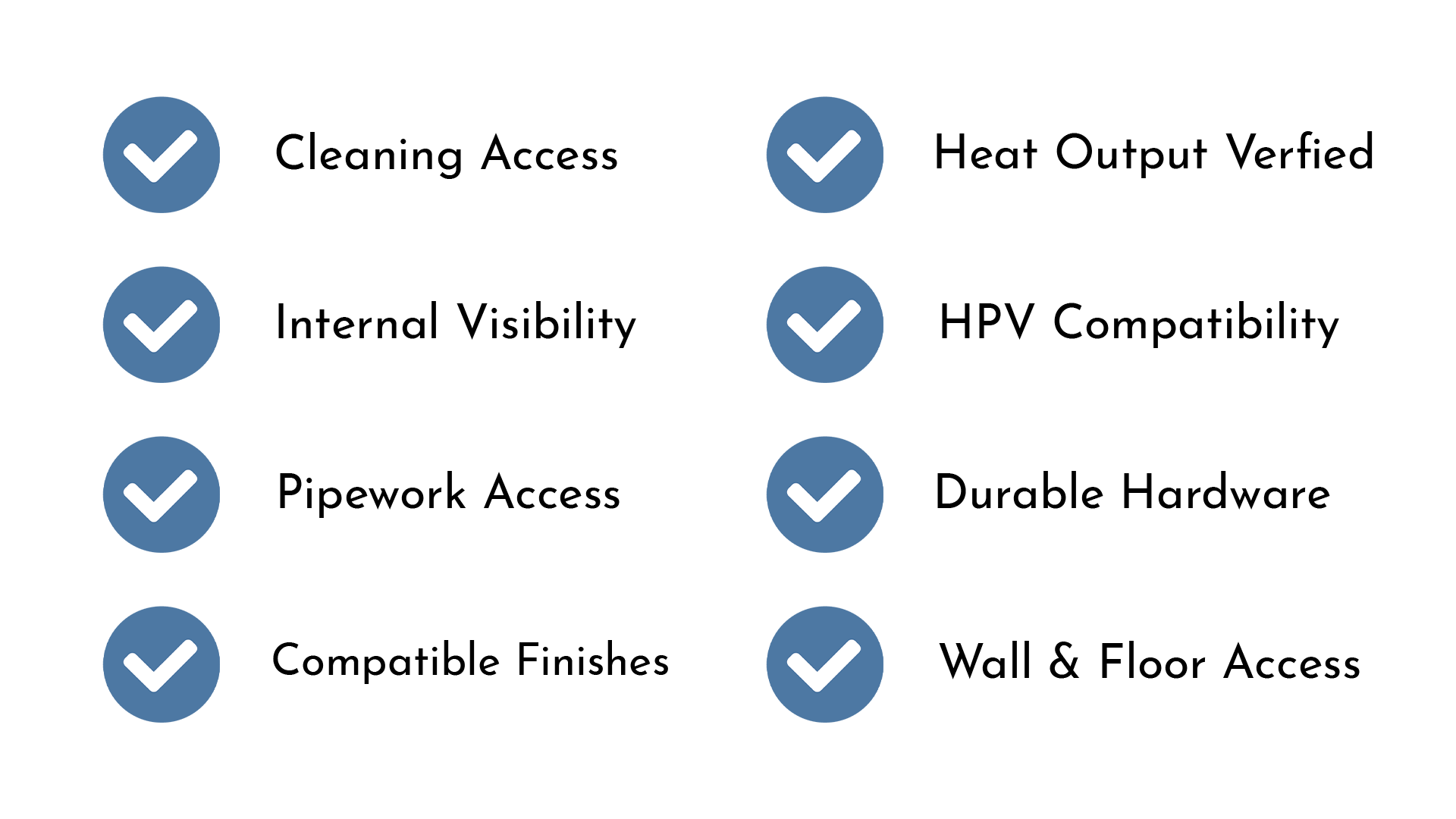
Hygiene-critical radiator specification checklist
- Has the room's infection-risk category been set?
- Has the cleaning team reviewed the proposed design?
- Can the casing open without full disassembly?
- Does the drop-down door expose the whole area that needs cleaning?
- Can the radiator, valves and pipework all be reached?
- Can the wall and floor behind or beneath the unit be cleaned?
- Are the finishes compatible with the approved detergents and disinfectants?
- Is any antimicrobial claim backed by test evidence?
- Is BioCote®, or an equivalent, positioned as supplementary to cleaning?
- Is compatibility with HPV or another decontamination process confirmed where relevant?
- Are gaps, joints and pipe penetrations properly detailed?
- Can damaged panels or coatings be repaired or replaced individually?
- Do locks, hinges and panels hold up to repeated daily access?
- Has the casing's effect on heat output been calculated?
- Have IPC, estates, clinical and cleaning teams signed off the final arrangement?
Next step
For specification support on radiator covers in hygiene-critical or secure healthcare rooms, contact Contour's technical team on +44 (0) 1952 290498 or sales@contourheating.co.uk.

%20(1).png)
/anti-ligature%20vent%20grilles.jpg)