-1.png)








Every radiator specification sheet carries the same four terms: BS EN 442, Delta T, BTU, Watts. They appear in specifications, procurement schedules, and M&E design drawings — often without explanation. For estates managers, facilities teams, and anyone buying or specifying heating for the first time, the numbers can feel more like gatekeeping than guidance.
They aren't. Each value tells you something specific and useful. This guide covers what the terms mean, how they connect, and why accuracy is important in NHS and healthcare settings where heating performance has to be precise, not approximate.
BS EN 442: the standard behind the numbers
BS EN 442 is the European test standard that defines how radiator heat output is measured and reported. Before BS EN 442, manufacturers could quote output using different methods and conditions, making direct product comparisons unreliable.
The standard is a third party laboratory test: a defined room temperature, a defined water flow and return temperature, and a declared measurement protocol. Output ratings on a compliant product data sheet are comparable across manufacturers because they were produced under identical conditions.
For specifiers and estates teams, the practical value is comparability. When you're reviewing two radiators of the same physical size from different suppliers, BS EN 442 compliance means the published ratings on each sheet were calculated in the same way. Without it, you're comparing numbers that may not be measuring equivalent performance.
Contour radiators are tested and rated to BS EN 442. You can find output tables on individual product pages or at the download page →
Delta T: the temperature difference that determines output
Delta T (written as ΔT or dt) is the difference between the average water temperature inside the radiator and the air temperature of the room it's heating.
The BS EN 442 test uses Delta T 50 (ΔT50) as its reference point. In practice, that means:
-
Flow temperature: 75°C
-
Return temperature: 65°C
-
Average water temperature: 70°C
-
Room temperature: 20°C
-
Delta T: 70 − 20 = 50°C
The published output is based on that Delta T. Change the water temperature, as you might run a boiler running at lower temperatures, and the output changes too.
This is particularly relevant for the carbonisation of NHS estates because as Trusts move toward lower-temperature heating systems compatible with heat pumps (typically running at 45–55°C flow temperature rather than 80°C), the Delta T drops significantly. A radiator sized at ΔT50 will deliver noticeably less heat at ΔT30. The solution is to oversize — but only if you know what the output curve looks like at lower temperatures.
If you're specifying a low-temperature or future-proofed circuit, ask for output data at multiple Delta Ts, not just the standard ΔT50 reference. Our technical team can provide this for Contour products on request.
BTU and Watts: two units for heat output
BTU (British Thermal Unit) and Watts both describe heat output, but they come from different measurement systems.
Watts (W) is the metric unit. It's what BS EN 442 test results report, and what M&E consultants work in.
BTU/h is the imperial unit. It's still common in older NHS estates documentation, boiler specs, and some contractor schedules.
Conversion Formula:
1 BTU/hr = 0.293071 Watts
1 Watt = 3.41214 BTU/hr
So a radiator rated at 1,000W outputs approximately 3,412 BTU/h. If you're working from a room heat loss calculation in BTUs and need to match it to a radiator spec in Watts, multiply the BTU rating by 0.293071.
Most modern specifications now use Watts. If you're reviewing older documentation or converting a legacy estates schedule, the BTU value is usually the one to convert from. For assistance with calculation use https://www.unittables.com/conversion/btu-to-watts (opens in another window)
Why accurate heat output is critical in healthcare specification
Getting heat output right in clinical spaces isn't just a comfort issue, it has compliance and safety implications.
NHS guidance, including HBN 00-09 and HTM 03-01, sets temperature requirements for clinical spaces by room type. Spaces that fail to reach specified temperatures because heating has been under-specified can generate complaints, IPC concerns, and estates team pressure. Conversely, oversizing without accounting for low-temperature circuits means spending capital on radiators that deliver more heat than the system can supply.
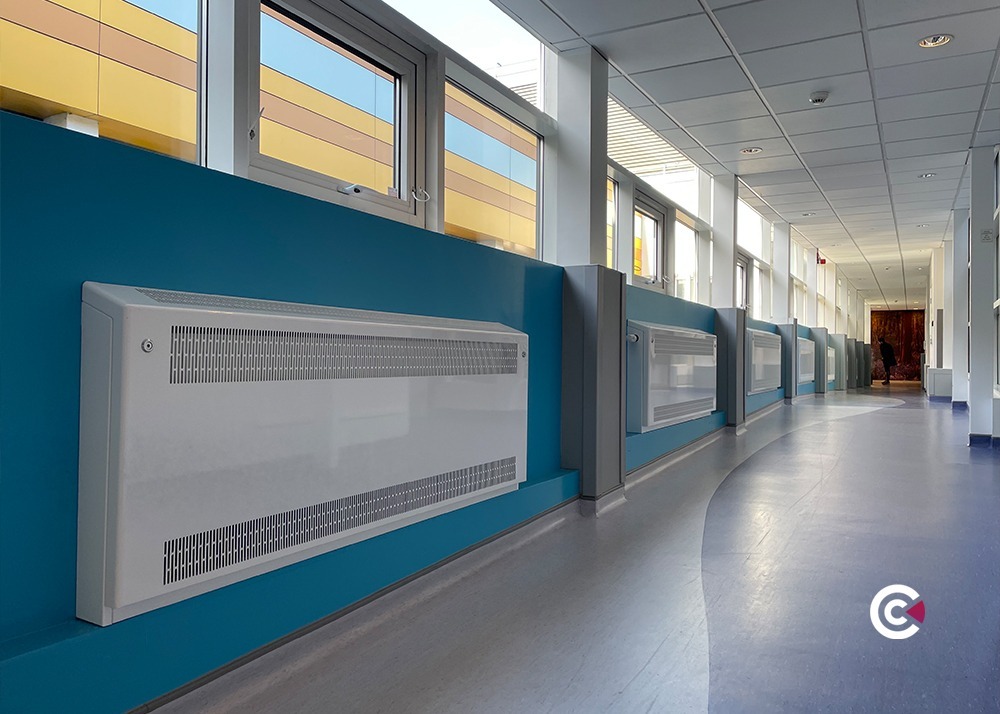
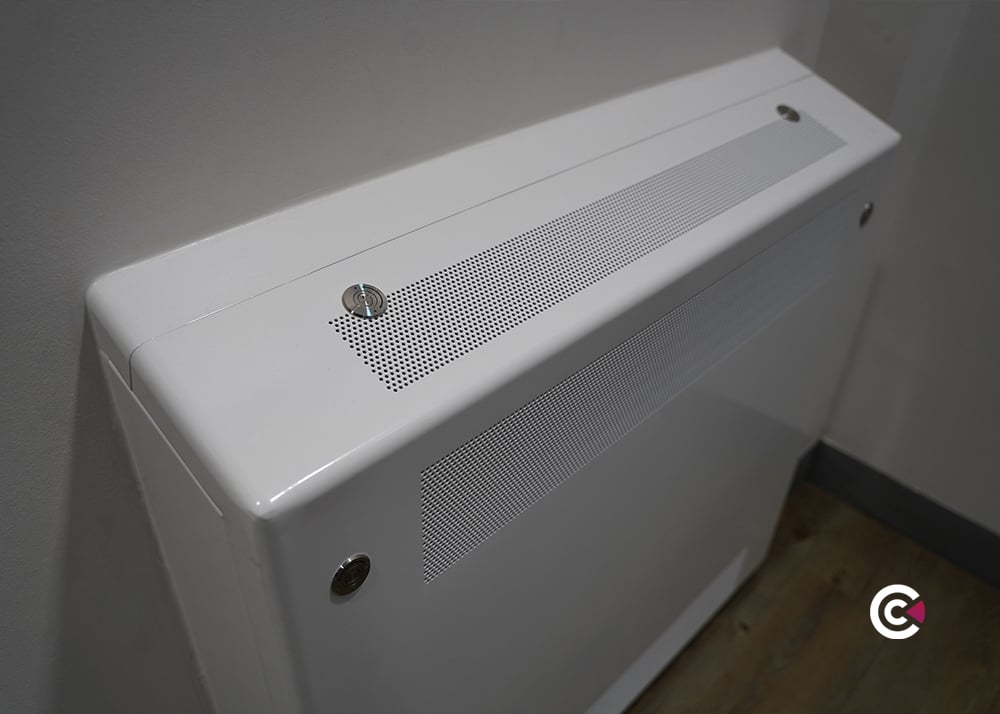
In mental health settings, there's an additional consideration worth noting at specification stage. Anti-ligature guards restrict airflow around the radiator, since the grille apertures are smaller than an open or standard cover. This reduces output compared to a bare radiator: typically by around 11% for standard grilles and up to 20% for anti-ligature grilles. A guarded radiator will need to be sized larger than the bare radiator figures suggest to achieve the same room output.
If you're specifying heating for a PICU, acute adult ward, or CAMHS unit, Contour's published output tables for guarded radiators already account for this reduction, giving you the correct figure to work from directly rather than needing to adjust the bare radiator rating yourself. View guarded radiator output tables here or contact the technical team for project-specific support.
Summary
These terms exist to make specification decisions more reliable, not more complicated. BS EN 442 provides a consistent basis for comparison. Delta T shows the test conditions behind the published rating. BTU and Watts express heat output in different units. Read together, they help you specify heating that performs as intended in the space it serves.
For product documentation, output tables at varying Delta Ts, or guidance on anti-ligature guarded radiator specification, visit the Contour Technical Hub or contact us

%20(1).png)

/anti-ligature%20vent%20grilles.jpg)